
I’m a Psychologist, and I Still Suck at Loss
A missing snake, an existential crisis, and the inconvenient price of being human.
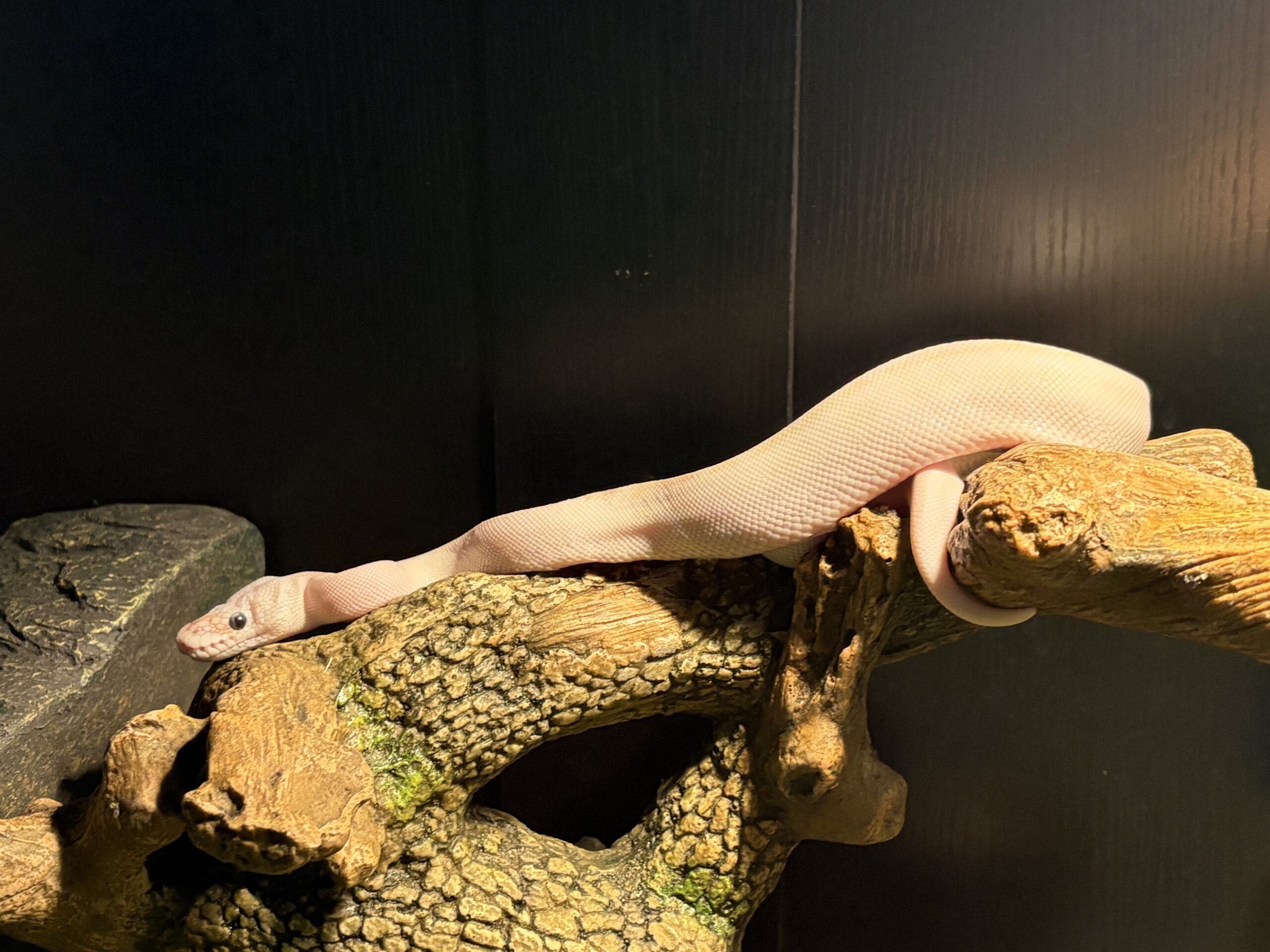
Our beloved baby ball python escaped from his enclosure over a week ago, and I was devastated.
Sometimes, I really don’t want to human around.
I particularly do not like the sensation of pain that comes with loss. You see, I’ve learned to cope with other types of pain pretty well — the pain of rejection, of failure, of the fear of being alone, of not being enough, of being a bad person, a bad mother, a bad daughter, a bad partner. The pain of realizing you’ve fucked up somewhere, the pain of embarrassment, of letting someone down, of missing opportunities. The pain of not belonging, of being accused incorrectly, of being accused correctly.
I’ve pretty much gotten a handle on most types of pain, and while I still hurt, I’m usually not devastated anymore.
But I don’t do well with loss.
I don’t do well when it becomes obvious that none of my strengths, my skills, or my degrees matter. None of my courage or perseverance or problem-solving or positive thinking or sense of humor or wit or social connections can do a goddamn thing — and that’s the hardest part. None of my breathwork, meditation, body movements, grounding, or thought-changing techniques. None of the social support.
None of the anything.
It’s gone.
No matter what you do, you can’t reverse it. No matter how good you are at life, it’s still gone. Dead. Forever.
I can’t use my skills to bargain my way out of it.
Don’t get me wrong. My skills and ability to take perspective do help me cope. But holy fuck, is the pain painful! Holy Lord, how do we endure this type of pain and then somehow function?! How do we not simply collapse and break forever and refuse to face life ever again?!
How do we survive the loss of loved ones, of pets, of marriages, of innocence? How do we survive the irreversible?
Why are we so terrible at this?!
Humans have been losing each other since life began. Shouldn’t we be good at this by now? Shouldn’t we be able to use our accumulated wisdom to say, “Well, nothing lasts forever,” and “This is the cycle of life,” and “All things must end” — and actually feel accordingly?!
Why is it that we know all the things, and yet the searing pain in our hearts is so deep, so profound, so barely manageable? As if someone were literally stabbing a knife through our chests?
How is it that, with a degree in psychology, twenty years of helping my clients move through loss, and after experiencing so much loss myself, I still meet every new loss with waterfalls of tears and what seems like an inconsolable heart?
And yet, pain is the price we pay for being alive.
And again, as if every time were the first time, I realize that the only way forward is through. That there is no escaping it. No outwitting it. That, at the end of the day, sometimes nothing will bring me relief quite like a good old cry, and nothing but time will eventually soften the pain.
But in order for that healing to happen, I have to feel it. I have to allow it. I have to resist the temptation to avoid it or block it or make excuses or think positively or get too busy or buy a gecko.
So, I cried.
I cried for days, trying to accept that our sweet little guy was dead somewhere in a far corner of the house and that no amount of searching would change that.
I cried and cried and asked the universe to show me what the lesson was here.
And what I heard in return was something like this:
“To teach you how to be a human. To teach you that loss is a part of life, and yet perhaps we never really lose anything, because we are all made of the same substance and return to that same substance. That losing your beloved python — while heartbreaking — is a little like a child playing peekaboo: close your eyes, and it’s gone.
Perhaps some of our emotional pain comes from not being able to see beyond this illusion. And perhaps we aren’t really meant to. We are meant to sleep and hurt when our loved ones are gone, even as more and more of us begin to entertain the idea that death, too, might be an illusion.”
So I was mad at God, at the universe, if you will, at whatever made me go through this human experience that was tearing me apart on the inside.
I was unwilling to accept my humanity and the inevitable suffering that comes with it. Yet again.
How many more times am I going to be shown that this is the very experience I’ve signed up for?! How many more times am I going to try to rise above my humanity, only to be humbly plopped right back into it?!
And so I gave up.
I gave up and surrendered to my tears, to my pain, to my sense of loss, and — the worst feeling in the world — to the sense of permanent loss.
I had an awful evening.
And the next day, I woke up feeling renewed. Like a snake who had shed its skin.
I woke up thankful for this reminder to cherish everything I come in contact with, to remember that life and all our experiences on Earth are so very fleeting. I felt peace and calm and a sense of everything being right in the world again.
That day, I went to the bathroom and noticed something white moving, slithering its way out of my shower.
And there he was!
My beloved Freddy, with his beautiful blue eyes. Very thin, but unharmed.
I started calling the kids. I was overjoyed! I knew that my middle son, the sensitive one whose snake this was, would be oh so very quietly relieved. And I was so glad to give him another reason to believe in hope and miracles.
But what I find particularly beautiful is that the peace came before the miracle.
I had found peace before I found Freddy.
Because acceptance of what is and hope for what could be can coexist. We don’t have to abandon one to make room for the other.
Today, I am grateful for the intricate fabric that makes up us human beings, where hope and grief, acceptance and protest, love and disdain, fear and courage can all coexist.
This week, I was taught to hold the acceptance of loss and the hope of reunion at the same time. I was reminded of how intimately beauty and pain are intertwined, and how the vulnerability of loving something is inseparable from the possibility of losing it.
Happy Thanksgiving, everyone!
This season, I am grateful for the contrast that is our lives. I am reminded of the question Mikhail Bulgakov poses in The Master and Margarita: What would good do without evil, and what would the earth look like without shadows?
Perhaps being fully human isn’t about learning how to hurt less, but about remaining willing to love just as much.
Your Messy Magid